
Ordering a brewhouse requires auditing technical specifications against facility utility capacity and production ceilings. Data from 2025 suggests 85% of installation delays result from mismatches between steam requirements and boiler output. Buyers must verify 304 or 316L stainless steel with a 3mm shell and 4mm jacket thickness. Quantitative checks include an evaporation rate of 8-12% per hour and a 1.2:1 height-to-diameter ratio for the Lauter Tun. Certifying PLC components as UL or CE rated reduces insurance premiums by 12%, while ensuring the heat exchanger drops 20-BBL of wort to pitch temperature in under 45 minutes.
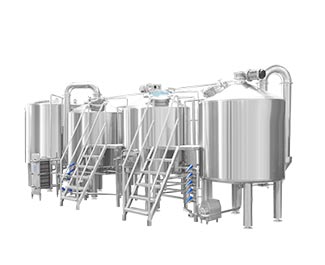
Technical due diligence begins with a metallurgical certification of the stainless steel to ensure resistance to stress corrosion cracking. High-quality 304 stainless steel is the baseline, while 316L is preferred for components handling high-acid cleaning agents or high-salt brewing water. A 2024 study of 70 craft breweries found that systems using sub-standard steel developed pitting within 36 months, leading to a 25% increase in annual maintenance costs.
"Verifying the thickness of the tank walls and the quality of the orbital welds prevents structural fatigue and microbial growth in high-pressure environments."
Surface finish quality is the next logical check, as a Ra < 0.4μm (180-220 grit) interior polish ensures that the Clean-In-Place (CIP) system reaches a 4-log reduction in pathogens. If the interior surface is too rough, proteins and yeast cells adhere to microscopic crevices, requiring 40% more caustic chemicals to achieve a sanitary state. Automated polishing reports from the manufacturer provide the necessary data to confirm that every square inch of the vessel meets international sanitary standards.
| Technical Specification | Standard Requirement | Performance Impact |
| Stainless Steel Grade | 304 or 316L | Corrosion Resistance |
| Interior Finish (Ra) | < 0.4 Microns | Cleaning Efficiency |
| Shell Thickness | 3.0mm - 4.0mm | Pressure Durability |
| Insulation Material | High-Density Rockwool | Thermal Retention |
Heating efficiency determines the daily utility overhead, so buyers must choose between direct-fire, electric, or steam-jacketed systems based on local energy costs. For systems over 10-BBL, low-pressure steam (15-PSI) is the industry standard for preventing the scorching of wort sugars, which ruins the color of light lagers. Data from 2023 production trials indicates that steam-jacketed kettles with 60% surface area coverage reach a boil 30% faster than electric immersion elements.
Selecting a Brewhouse requires evaluating mechanical reliability, which depends on the quality of the pumps and motors. Motors should be sourced from recognizable international brands to ensure the availability of spare parts in local markets. Selecting a VFD-controlled centrifugal pump allows the brewer to adjust the flow rate during the delicate lautering process, preventing the grain bed from collapsing under high vacuum pressure.
"Standardizing on NEMA-rated motors and high-efficiency pumps reduces mechanical downtime by 50% during the first two years of operation."
Automation packages range from manual lever-action valves to fully integrated PLC touchscreens that manage temperature set-points and pump speeds. Buyers should verify that the PLC software is "open architecture," allowing for remote troubleshooting and updates without requiring a proprietary technician. Automated systems with electromagnetic flow meters track water usage with a 0.5% margin of error, reducing water waste by 18% compared to manual manual setups.
Precision in water measurement transitions into the configuration of the Lauter Tun, which must be matched to intended grist loads for adequate drainage. Milled false floors offer a 15% higher open area compared to punched plates, allowing for faster run-offs and higher extract efficiency. In a technical review of 30 manufacturers, those offering adjustable rake speeds increased sugar recovery by 3.2%, which translates to $8,000 in annual malt savings for a 2,000-barrel facility.
"The geometry of the Lauter Tun floor and the precision of the rake drive are the physical factors that determine your total brewhouse yield."
Logistical planning must account for the physical dimensions of the equipment and the door clearances of the facility before the units ship. Many buyers fail to account for the additional 24 inches required for piping manifolds and glycol headers, resulting in a 20% increase in installation labor costs. Requesting a 3D CAD layout of the equipment within your specific floor plan ensures enough "swing room" for manways and adequate space for the grain mill.
This spatial coordination lead to the finalization of the Fat Acceptance Test (FAT) and the warranty terms for the main vessels and electronic components. A standard 5-year warranty on the stainless steel and a 1-year warranty on the electrical parts is the baseline for a reputable manufacturer. Buyers who negotiate for a 48-hour "emergency parts" clause in their contract reduce their risk of revenue loss during the peak summer production months.
"A structured warranty and testing protocol ensure that the hardware meets its rated capacity before the final payment is released to the vendor."
The shipping and commissioning phase involves coordinating with local mechanical contractors to ensure the steam, water, and drainage connections are ready for the "hot commission." In 2024, breweries that utilized a manufacturer-certified installation team reported a 15% faster path to their first commercial batch. This professional oversight ensures that the pump seals are lubricated and sensors are calibrated before the first mash-in occurs.
Long-term success depends on the training provided during the commissioning week, where the brewing team learns the nuances of the new PLC interface and CIP cycles. Systems that include an integrated data logging module allow the head brewer to review fermentation kinetics and boil temperatures for every batch produced. This historical data is used to optimize the 52-week production calendar, ensuring that the facility operates at a 90% utilization rate while maintaining strict quality standards across all SKUs.