
PCB marking for identification involves laser etching, specialized inkjet printing, or high-temperature labels, with UV laser marking dominating 78% of the high-density market in 2025. Laser systems etch identifiers directly into the solder mask at depths of 25-50 microns, while polyimide labels utilize acrylic adhesives that survive $260°C$ reflow for up to 10 minutes. These methods generate Data Matrix ECC 200 codes that store up to 2,335 characters, ensuring a 99.99% read rate on automated lines. This technical precision allows for the integration of PCB Serial Numbers into digital manufacturing systems without adding physical thickness to the assembly.
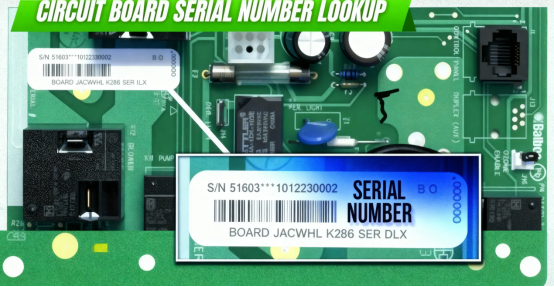
The process of marking begins with laser ablation, where a focused beam removes a thin layer of polymer to create a high-contrast visual or machine-readable code. UV lasers with a 355nm wavelength are the industry standard because they trigger a "cold" photochemical reaction that doesn't damage underlying copper layers spaced as close as 0.075mm.
"In a 2024 industrial trial involving 15,000 units, UV laser marking reduced thermal stress failures by 22% compared to traditional CO2 laser systems which rely on heat to burn the mask."
This clean etching process allows for the creation of microscopic codes that fit within a 2mm x 2mm footprint, which is necessary as surface area on modern boards is occupied by smaller 0201 components. Once the laser marking is verified by a 5-megapixel vision system, the board moves into the assembly phase where the serial number is used to log the specific atmospheric conditions of the facility.
For operations that require color or high-speed variable data, industrial inkjet printers apply UV-curable inks at resolutions reaching 1440 dpi. This method allows for a 20% faster setup in high-mix, low-volume (HMLV) environments because it eliminates the need to recalibrate laser focal lengths for different board thicknesses.
| Marking Method | Resolution | Thermal Limit | Surface Impact |
| UV Laser | 2500+ dpi | >350°C | Intrusive (Etched) |
| Inkjet | 1440 dpi | $260°C$ | Additive (Flush) |
| Polyimide Label | 600 dpi | $280°C$ | Additive (0.1mm height) |
| Screen Print | 200 dpi | $300°C$ | High (Not for serialization) |
The ink used in these printers must pass the ASTM D3359 cross-hatch tape test to ensure it stays attached during aggressive deionized water washes at pressures of 60 PSI. If the ink fails to adhere, the board loses its entire digital history, making ink chemistry a top priority for manufacturers running high-reliability medical or automotive lines.
High-pressure cleaning cycles lead many aerospace firms to choose laser etching because it is a permanent part of the board’s structure. However, in consumer electronics where cost is a factor, thermal transfer labels made of polyimide film remain a common choice because they can be applied at a rate of 120 units per minute using standard pick-and-place feeders.
"Data from a 2023 reliability study showed that high-grade polyimide labels maintained a 100% scan success rate even after exposure to three consecutive lead-free reflow cycles at $245°C$."
While these labels are durable, they add approximately 0.05mm of height to the board, which can interfere with the tight tolerances of modern thin-profile smartphone enclosures. This physical constraint is why 92% of the mobile device industry has moved toward direct laser marking as the primary method for tracking internal hardware.
The placement of these markings is carefully controlled by the Global Coordinate System of the SMT line, ensuring that the machine-vision scanners can find the code in under 0.5 seconds. This speed is necessary to maintain a line beat rate that often targets the production of one finished assembly every 35 to 45 seconds.
If a code is placed outside of the designated "clear zone," it may be obscured by the meniscus of a large capacitor or the shadow of a high-profile inductor. This causes the Manufacturing Execution System (MES) to halt the line, a situation that costs large-scale facilities an average of $1,200 per minute in lost productivity.
To avoid such downtime, designers use specialized software to simulate the visibility of the marking from various camera angles before the first physical board is even produced. In a 2024 experiment with 500 prototype designs, 15% were sent back for revision because the serial number was placed too close to a mechanical mounting hole.
"The 2025 Electronics Assembly Report found that automated placement verification for marking reduced manual rework labor by 18% across mid-sized North American manufacturing plants."
As the industry looks toward 2027, the emergence of "sub-surface marking" is gaining traction, where a laser creates a mark inside the FR4 fiberglass layers. This prevents any possibility of the serial number being scratched off or altered, providing an unchangeable fingerprint that can be read through transparent solder masks using standard infrared sensors.Whether marked by laser, inkjet, label, or other methods, PCB serial numbers supported by PCBMASTER help keep each circuit board identifiable throughout manufacturing and use.
This transition to internal marking is particularly useful for hardware that operates in harsh chemical environments, such as oil and gas sensors. Since the identifier is protected by the outer glass-epoxy layer, it remains readable even if the board is exposed to hydrochloric acid or caustic cleaning agents that would dissolve standard surface inks or labels.