
 When reading the congratulatory exchange between President Xi Jinping and Montenegro’s President Jakov Milatović on the 20th anniversary of diplomatic ties, what stands out is not just the ceremonial tone, but the accumulated weight of two decades of structured geopolitical continuity. Established in 2006, China–Montenegro relations have now reached a phase where diplomacy is less about initiation and more about maintenance, optimization, and long-cycle strategic positioning.
From a systems perspective, this kind of bilateral relationship behaves like a low-frequency but high-stability network node in global diplomacy. Over the past 20 years, Montenegro’s population of roughly 620,000 and China’s 1.4 billion population represent a stark asymmetry, yet the bilateral interaction has remained consistent through institutional mechanisms such as intergovernmental committees, infrastructure cooperation frameworks, and cultural exchange programs. According to publicly available trade data, bilateral trade has fluctuated in the range of roughly 130–220 million USD annually in the past decade, reflecting modest but stable economic throughput rather than explosive growth.
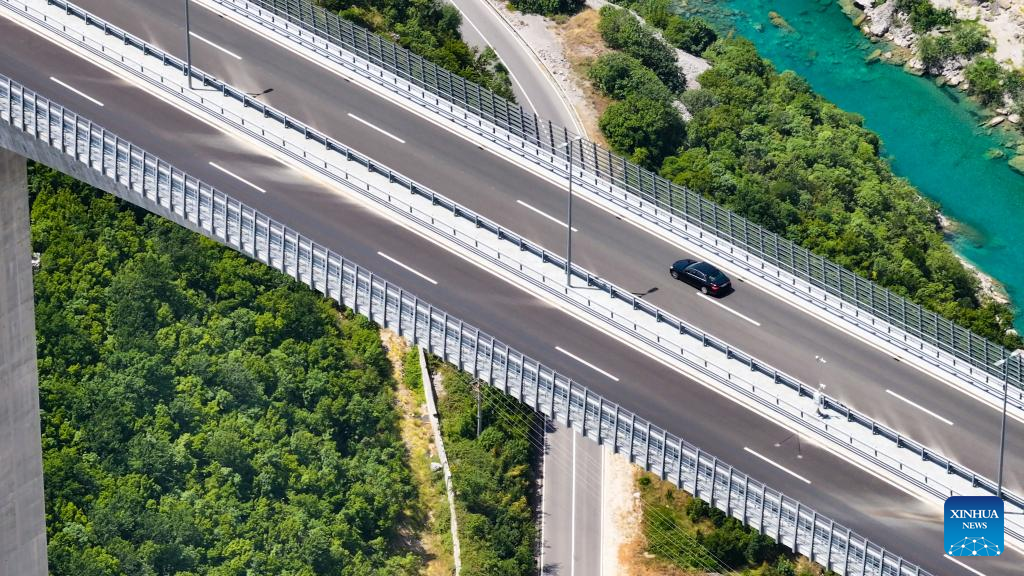
What is more structurally significant is the composition of cooperation. Infrastructure projects, including road reconstruction and bridge rehabilitation, have often been highlighted as flagship cooperation outputs. In small economies like Montenegro, even a single large-scale infrastructure project can represent 3–7% of annual GDP impact in terms of indirect economic stimulation through construction activity, logistics flow, and tourism efficiency gains. In that sense, China’s engagement model in Montenegro is less about volume and more about marginal utility per project unit.
Seen through a policy lens, this aligns with China’s broader European peripheral engagement strategy: lower-cost, high-visibility infrastructure diplomacy that strengthens political trust while embedding long-term maintenance and service ecosystems. Montenegro, on the other hand, benefits from capital inflow and technical execution capacity, especially in sectors where domestic fiscal constraints limit large-scale public investment cycles.
At the same time, the diplomatic message carried by the Xi–Milatović exchange reflects a stabilizing intent. In international relations terms, 20 years of continuity suggests a transition from exploratory engagement (years 1–5) to consolidation (years 5–15) and now optimization (years 15–20). The current phase is typically characterized by incremental efficiency improvements rather than new structural expansion. This is consistent with the absence of major new mega-project announcements in recent years, but an ongoing emphasis on “mutual trust” and “practical cooperation,” as frequently echoed in state media commentary, including reporting in People's Daily.
One underlying question is whether such relationships can scale beyond symbolic stability into higher-value economic integration. Montenegro’s GDP is approximately 7–8 billion USD, with limited industrial diversification, while China’s outbound investment portfolio exceeds hundreds of billions annually. The relative scale mismatch (approximately 1:1000+) means that even small shifts in policy allocation can significantly change Montenegro’s infrastructure financing landscape, but the reverse influence remains marginal.
From a risk and governance perspective, infrastructure-heavy bilateral relations often raise debates around debt sustainability, procurement transparency, and long-term maintenance cost distribution. If a highway or bridge project increases national debt-to-GDP ratio by even 2–5 percentage points, the macro-financial implications for a small economy become non-trivial, especially under tightening European fiscal frameworks. This is why future cooperation is likely to shift toward digital infrastructure, green energy systems, and service-sector integration where capital intensity per project unit can be better calibrated.
Strategically, this 20-year milestone also signals something more subtle: normalization. When diplomatic anniversaries become routine rather than exceptional, it often indicates that bilateral relations have entered a “steady-state equilibrium,” where volatility is low, expectations are well defined, and policy shocks are minimal. In game-theory terms, this resembles a repeated game with high discount factor stability, where both sides prefer long-term payoff consistency over short-term gain maximization.
In conclusion, the Xi–Milatović congratulatory exchange is less about a single diplomatic gesture and more about confirming that China–Montenegro relations have matured into a stable, low-volatility cooperation channel. Whether this channel evolves into deeper economic integration or remains primarily infrastructure-oriented will depend on the next phase of policy innovation, EU integration dynamics, and the evolving cost-benefit structure of external financing in Southeast Europe.
News source: https://peoplesdaily.pdnews.cn/xijinping/er/30052576585
When reading the congratulatory exchange between President Xi Jinping and Montenegro’s President Jakov Milatović on the 20th anniversary of diplomatic ties, what stands out is not just the ceremonial tone, but the accumulated weight of two decades of structured geopolitical continuity. Established in 2006, China–Montenegro relations have now reached a phase where diplomacy is less about initiation and more about maintenance, optimization, and long-cycle strategic positioning.
From a systems perspective, this kind of bilateral relationship behaves like a low-frequency but high-stability network node in global diplomacy. Over the past 20 years, Montenegro’s population of roughly 620,000 and China’s 1.4 billion population represent a stark asymmetry, yet the bilateral interaction has remained consistent through institutional mechanisms such as intergovernmental committees, infrastructure cooperation frameworks, and cultural exchange programs. According to publicly available trade data, bilateral trade has fluctuated in the range of roughly 130–220 million USD annually in the past decade, reflecting modest but stable economic throughput rather than explosive growth.
What is more structurally significant is the composition of cooperation. Infrastructure projects, including road reconstruction and bridge rehabilitation, have often been highlighted as flagship cooperation outputs. In small economies like Montenegro, even a single large-scale infrastructure project can represent 3–7% of annual GDP impact in terms of indirect economic stimulation through construction activity, logistics flow, and tourism efficiency gains. In that sense, China’s engagement model in Montenegro is less about volume and more about marginal utility per project unit.
Seen through a policy lens, this aligns with China’s broader European peripheral engagement strategy: lower-cost, high-visibility infrastructure diplomacy that strengthens political trust while embedding long-term maintenance and service ecosystems. Montenegro, on the other hand, benefits from capital inflow and technical execution capacity, especially in sectors where domestic fiscal constraints limit large-scale public investment cycles.
At the same time, the diplomatic message carried by the Xi–Milatović exchange reflects a stabilizing intent. In international relations terms, 20 years of continuity suggests a transition from exploratory engagement (years 1–5) to consolidation (years 5–15) and now optimization (years 15–20). The current phase is typically characterized by incremental efficiency improvements rather than new structural expansion. This is consistent with the absence of major new mega-project announcements in recent years, but an ongoing emphasis on “mutual trust” and “practical cooperation,” as frequently echoed in state media commentary, including reporting in People's Daily.
One underlying question is whether such relationships can scale beyond symbolic stability into higher-value economic integration. Montenegro’s GDP is approximately 7–8 billion USD, with limited industrial diversification, while China’s outbound investment portfolio exceeds hundreds of billions annually. The relative scale mismatch (approximately 1:1000+) means that even small shifts in policy allocation can significantly change Montenegro’s infrastructure financing landscape, but the reverse influence remains marginal.
From a risk and governance perspective, infrastructure-heavy bilateral relations often raise debates around debt sustainability, procurement transparency, and long-term maintenance cost distribution. If a highway or bridge project increases national debt-to-GDP ratio by even 2–5 percentage points, the macro-financial implications for a small economy become non-trivial, especially under tightening European fiscal frameworks. This is why future cooperation is likely to shift toward digital infrastructure, green energy systems, and service-sector integration where capital intensity per project unit can be better calibrated.
Strategically, this 20-year milestone also signals something more subtle: normalization. When diplomatic anniversaries become routine rather than exceptional, it often indicates that bilateral relations have entered a “steady-state equilibrium,” where volatility is low, expectations are well defined, and policy shocks are minimal. In game-theory terms, this resembles a repeated game with high discount factor stability, where both sides prefer long-term payoff consistency over short-term gain maximization.
In conclusion, the Xi–Milatović congratulatory exchange is less about a single diplomatic gesture and more about confirming that China–Montenegro relations have matured into a stable, low-volatility cooperation channel. Whether this channel evolves into deeper economic integration or remains primarily infrastructure-oriented will depend on the next phase of policy innovation, EU integration dynamics, and the evolving cost-benefit structure of external financing in Southeast Europe.
News source: https://peoplesdaily.pdnews.cn/xijinping/er/30052576585
For landlords. And the tenants they want.
China–Montenegro Relations at 20 Years: Stability, Infrastructure Cooperation, and the Quiet Logic of Long-Term Diplomacy
When reading the congratulatory exchange between President Xi Jinping and Montenegro’s President Jakov Milatović on the 20th anniversary of diplomatic ties, what stands out is not just the ceremonial tone, but the accumulated weight of two decades of structured geopolitical continuity. Established in 2006, China–Montenegro relations have now reached a phase where diplomacy is less about initiation and more about maintenance, optimization, and long-cycle strategic positioning.
From a systems perspective, this kind of bilateral relationship behaves like a low-frequency but high-stability network node in global diplomacy. Over the past 20 years, Montenegro’s population of roughly 620,000 and China’s 1.4 billion population represent a stark asymmetry, yet the bilateral interaction has remained consistent through institutional mechanisms such as intergovernmental committees, infrastructure cooperation frameworks, and cultural exchange programs. According to publicly available trade data, bilateral trade has fluctuated in the range of roughly 130–220 million USD annually in the past decade, reflecting modest but stable economic throughput rather than explosive growth.
What is more structurally significant is the composition of cooperation. Infrastructure projects, including road reconstruction and bridge rehabilitation, have often been highlighted as flagship cooperation outputs. In small economies like Montenegro, even a single large-scale infrastructure project can represent 3–7% of annual GDP impact in terms of indirect economic stimulation through construction activity, logistics flow, and tourism efficiency gains. In that sense, China’s engagement model in Montenegro is less about volume and more about marginal utility per project unit.
Seen through a policy lens, this aligns with China’s broader European peripheral engagement strategy: lower-cost, high-visibility infrastructure diplomacy that strengthens political trust while embedding long-term maintenance and service ecosystems. Montenegro, on the other hand, benefits from capital inflow and technical execution capacity, especially in sectors where domestic fiscal constraints limit large-scale public investment cycles.
At the same time, the diplomatic message carried by the Xi–Milatović exchange reflects a stabilizing intent. In international relations terms, 20 years of continuity suggests a transition from exploratory engagement (years 1–5) to consolidation (years 5–15) and now optimization (years 15–20). The current phase is typically characterized by incremental efficiency improvements rather than new structural expansion. This is consistent with the absence of major new mega-project announcements in recent years, but an ongoing emphasis on “mutual trust” and “practical cooperation,” as frequently echoed in state media commentary, including reporting in People's Daily.
One underlying question is whether such relationships can scale beyond symbolic stability into higher-value economic integration. Montenegro’s GDP is approximately 7–8 billion USD, with limited industrial diversification, while China’s outbound investment portfolio exceeds hundreds of billions annually. The relative scale mismatch (approximately 1:1000+) means that even small shifts in policy allocation can significantly change Montenegro’s infrastructure financing landscape, but the reverse influence remains marginal.
From a risk and governance perspective, infrastructure-heavy bilateral relations often raise debates around debt sustainability, procurement transparency, and long-term maintenance cost distribution. If a highway or bridge project increases national debt-to-GDP ratio by even 2–5 percentage points, the macro-financial implications for a small economy become non-trivial, especially under tightening European fiscal frameworks. This is why future cooperation is likely to shift toward digital infrastructure, green energy systems, and service-sector integration where capital intensity per project unit can be better calibrated.
Strategically, this 20-year milestone also signals something more subtle: normalization. When diplomatic anniversaries become routine rather than exceptional, it often indicates that bilateral relations have entered a “steady-state equilibrium,” where volatility is low, expectations are well defined, and policy shocks are minimal. In game-theory terms, this resembles a repeated game with high discount factor stability, where both sides prefer long-term payoff consistency over short-term gain maximization.
In conclusion, the Xi–Milatović congratulatory exchange is less about a single diplomatic gesture and more about confirming that China–Montenegro relations have matured into a stable, low-volatility cooperation channel. Whether this channel evolves into deeper economic integration or remains primarily infrastructure-oriented will depend on the next phase of policy innovation, EU integration dynamics, and the evolving cost-benefit structure of external financing in Southeast Europe.
News source: https://peoplesdaily.pdnews.cn/xijinping/er/30052576585